Ion Accelerators and Sources
The LPSC’s Accelerators and Ion Sources Division is dedicated to designing, building, and operating accelerators—or certain subsystems thereof—for physics programs and industrial applications. It also specializes in R&D on electron cyclotron resonance (ECR) ion sources, which have a wide range of applications: multicharged heavy-ion sources, charge-state amplification sources (or charge boosters), and very high-frequency sources. It also operates the GENESIS fast neutron platform.
Presentation
The activities of the Accelerators and Ion Sources Division focus on accelerator physics and its associated technologies: beam dynamics, radiofrequency, diagnostics, magnetism, and vacuum, as well as electron cyclotron resonance (ECR) ion sources for the production of multicharged ions and the multi-ionization of beams.
These activities address a broad spectrum of the laboratory’s research topics: nuclear physics (production of stable or radioactive ion beams) and particle physics (studies of colliders), as well as reactor physics (accelerator-driven systems, or ADS).
The Division contributes to several major accelerator and ion source programs, such as SPIRAL2 (2nd-Generation In-Line Radioactive Ion Production System) and NEWGAIN (NEW GAnil INjector) at GANIL, SPATIAL (Accelerator-Driven System for Transmutation and Reduction of Geological Storage) on the ADS GUINEVERE (Generator of Uninterrupted Intense Neutrons at the lead Venus Reactor) prototype at SCK-CEN, as well as PERLE (Powerful ERL for Experiments) at IJCLab and FCC (Future Circular Collider) at CERN. Through these collaborations, several areas of preliminary study and research have recently been initiated, such as plasma simulation in an RCE source, understanding specific phenomena in vacuum radiofrequency (RF) structures such as the multipactor, and the study of failure compensation in linacs.
For its experimental research, the Center draws on the expertise of the LPSC’s technical departments and receives funding from sources such as the ANR (EQUIPEX+).
History
The Accelerators and Ion Sources Division was formed through the merger of the LPSC’s accelerators and ion sources departments following the closure of the SARA (Rhône-Alpes Accelerator System) cyclotron in the early 2000s.
Since its creation, the division has focused on electrostatic accelerators for neutron production using machines of the GEnérateur de NEutrons Pulsé Intense (GENEPI) type. The GENEPI1 accelerator, following its successful coupling with the MASURCA (Cadarache Supergenerator Model) reactor and subsequent operation, was removed from Cadarache. GENEPI2 is still in operation at the LPSC. Initially designed for the Platform for Study and Research on Nuclear Energy (PEREN), it is now operated for the GENESIS (GEnerator of Neutrons for Sciences and IrradiationS) irradiation platform. The last machine, GENEPI-3C, was built and operated as part of the GUINEVERE project for the control of a nuclear reactor at SCK-CEN in Belgium. Today, it is undergoing a major modification involving the replacement of the pulsed ion source with an Electron Cyclotron Resonance (ECR) source as part of the SPATIAL project.
The development of RCE ion sources for accelerators is one of the cluster’s main activities. This type of ion source was invented at CEA-Grenoble by Richard Geller in the 1970s. Initially, these sources—which are often capable of producing intense beams of multicharged heavy ions—sparked a revival in the physics of atomic nucleus research (nuclear physics). Today, they are finding an ever-increasing number of applications, such as accelerators for hadron therapy—which destroy certain types of radiation-resistant tumors using high-energy carbon ion beams—or purely industrial applications, whether for materials processing or thin-film deposition.
The division has participated in several accelerator projects for nuclear research and reactor physics (SPIRAL2 at GANIL, MYRRHA at SCK-CEN), contributing to a variety of areas such as ion sources, beam dynamics, radiofrequency (RF power couplers), vacuum systems, diagnostics, and magnetism. It has also worked on hadron therapy applications for the ETOILE and CNAO projects. Finally, it has collaborated regularly with CERN on topics such as beam dynamics (LINAC4), radiofrequency structures (EUCARD, RFTech, CARE/HIPPI), and manufacturing monitoring.
To this day, collaborations with GANIL and CERN continue, including, for example, the development of the ASTERICS ion source and multipactor studies for the FCC.
Charges booster
Since the late 1990s, the division has been developing the “PHOENIX”-type “Charge Booster” ion source, which is capable of increasing the charge state of a low-energy beam. The ions are decelerated in the source’s RCE plasma, where they lose their electrons through electron bombardment before being extracted as an ion beam via an electrode system. Charge boosters are used in research facilities studying exotic ions—such as GANIL-SPIRAL1, TRIUMF-ISAC, and LNL-SPES—to make their re-acceleration more efficient. The developments carried out on the LPSC’s R&D source aim to improve the performance of charge boosters. These studies are supported and conducted in cooperation with GANIL. The LPSC also collaborates on the development of the LNL-SPES source, for which two collaboration and research contracts enabled the fabrication of the source and the subsequent reduction of co-extracted contamination—a key parameter for this technology. The LPSC’s 1+N+ test bench, on which the charge booster and its various diagnostics are tested, is also used during international experimental campaigns aimed at gaining a better understanding of RCE plasmas.
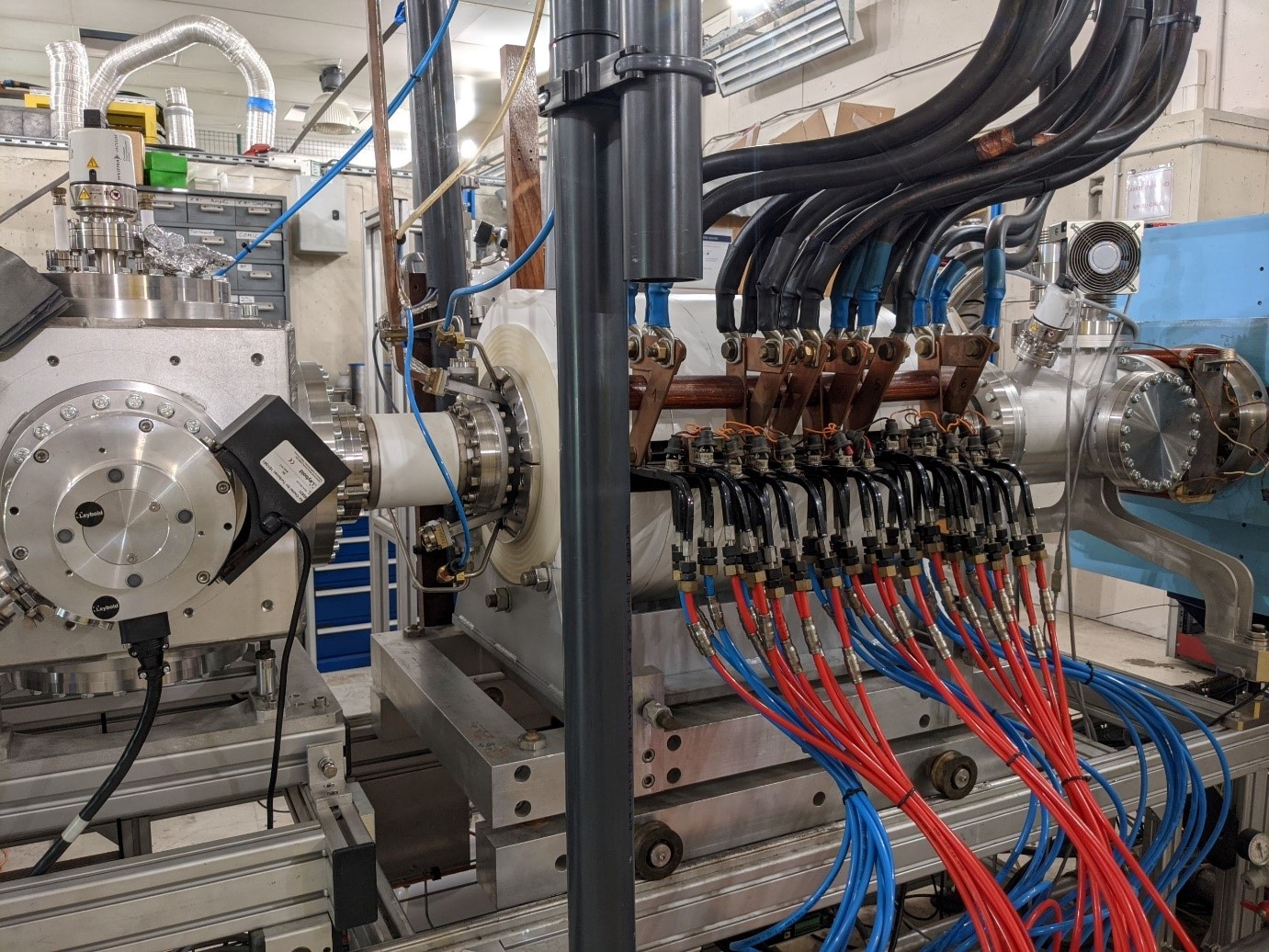
Booster de charges
ECRIPAC - Plasmas simulation
Le projet ECRIPAC (Electron Cyclotron Resonance Ion Plasma Acceleration) s’intéresse à valider par simulation le concept d’accélération plasma de pulses d’ions comme proposé par R. Geller en 1991, inventeur des sources d’ions à la résonance cyclotronique électronique (RCE). Un tel accélérateur est capable de produire des ions au-delà d’une énergie cinétique de 10 MeV/A avec les technologies usuelles d’une source RCE, donc sans l’emploi des classiques cavités accélératrices ni des modernes lasers de puissance femto seconde. Le concept initial de machine ECRIPAC est proposé sur la figure ci-dessous. La première phase du projet fait l’objet de la thèse de doctorat d’A. Cernuschi (UGA) au sein du pôle, en collaboration avec le laboratoire LAPLACE de Toulouse, spécialiste des simulations plasma. Après une étude bibliographique et la récente confirmation de la validité du concept par un code Monte-Carlo dédié à la dynamique des électrons, la mise en œuvre d’un code de type Particle In Cell (PIC), permettant de simuler la dynamique du plasma du générateur, va bientôt démarrer.
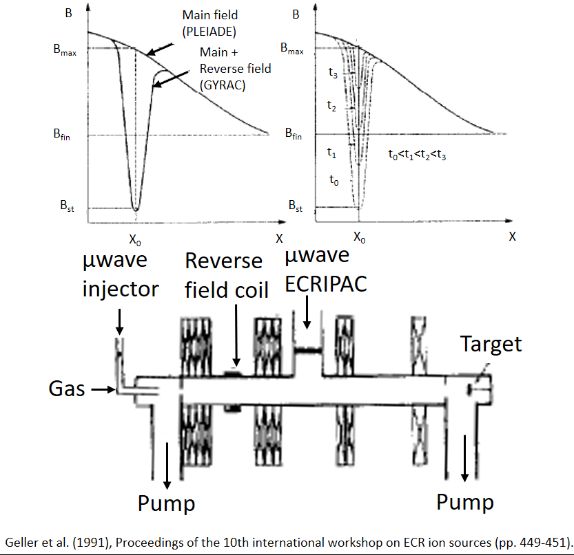
Illustration du concept d’accélération plasma ECRIPAC, comme originellement proposé par R. Geller en 1991
FCC
FCC (Future Circular Collider) is the major project currently under study at CERN for a circular accelerator with a circumference of nearly 100 km, designed to achieve energies of around 100 TeV.
The FCC–NPC Master Project encompasses the various contributions of the CNRS to the FCC project.
The Division is participating in the FCC-NPC project as part of Task Package 8, “SupraRadioFrequency,” for which it is responsible.
As part of this effort, an in-depth study of the multipactor in SWELL (Slotted Waveguide ELLiptical cavity) cavities—which are innovative and under consideration for the FCC—was conducted.
Other studies are currently under discussion with CERN.
GENEPI-2
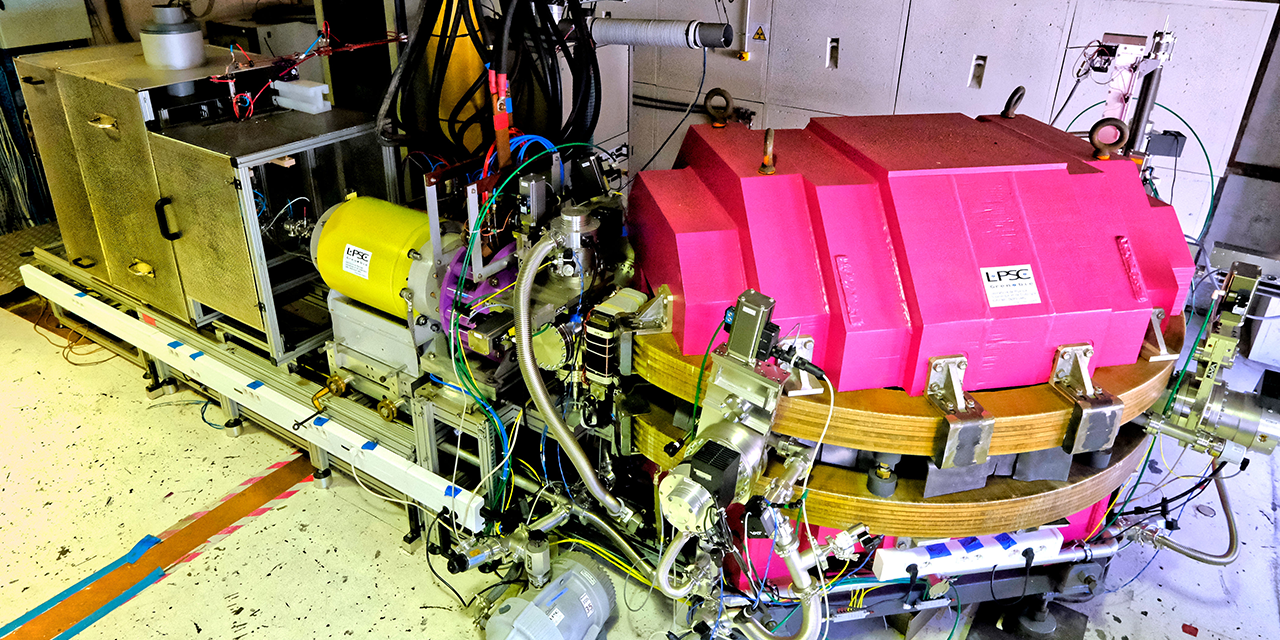
GENEPI-2 (Intense Pulsed NEutron Generator) is an electrostatic accelerator for deuterium ions (deutons) that generates a continuous, monochromatic neutron beam.
The deutons are produced by an RCE-type ion source. The source is mounted on a high-voltage platform at a potential of 220 kV. The potential difference accelerates the ions through the accelerating tube. The ions are then sorted by a dipole and guided through a series of quadrupoles and steerers to a deuterium or tritium target. The fusion reaction takes place at the target, producing 2.5 MeV neutrons with a deuterium target and 14 MeV neutrons with a tritium target.
GENEPI-2 was originally built for neutron physics experiments at the PEREN (Platform for Study and Research on Nuclear Energy) facility. Today, it is used to perform neutron irradiation experiments at the GENESIS (GEnerator of NEutrons for Science and IrradiationS) facility.
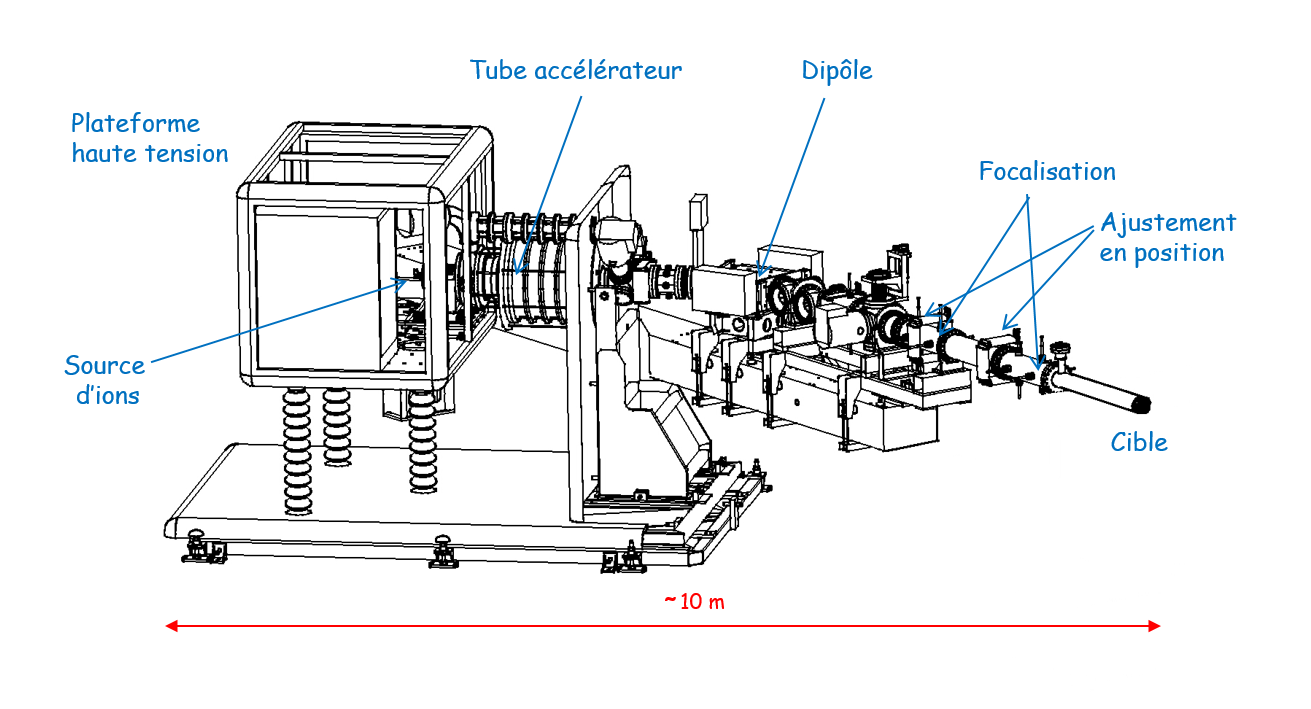
L'accélérateur GENEPI-2
MULTIPAC
Multipac is an IN2P3 research project involving the IJCLab and the LPSC, aimed at studying the multipactor phenomenon in order to reduce it and, if possible, eliminate it.
The multipactor is a parasitic resonant phenomenon that occurs in vacuum structures subjected to a radiofrequency (RF) wave. In the field of accelerators, it can, among other things, prevent the injection of RF power into the accelerating cavities and cause the ceramic couplers to break, resulting in the accelerator being exposed to air.
The Center is currently developing a test bench that is already being used to characterize the phenomenon (in collaboration with CEA Saclay, CEA IRFM, and ONERA DPHY) and to study anti-multipactor coatings (in collaboration with SIMaP / INC).
This work is supported by the CNRS, through the inter-institutional “80Primes” call for proposals, by the Carnot Institute “Energies du futur,” and by project grants.
NEWGAIN
The LPSC is involved in the NEW GANIL INjector (NEWGAIN) project, which aims to develop a new heavy-ion injector with a mass-to-charge ratio of up to 7 for GANIL’s SPIRAL2 linear accelerator. The division is responsible for coordinating the “Ion Source and Platform” and “System Engineering” work packages. In collaboration internally with SERM, the Electronics Department, and SDI, and externally with GANIL and the DACM at CEA Saclay, the LPSC is designing a superconducting RCE ion source named ASTERICS. A cross-sectional view of the mechanical design of the ASTERICS source is shown in the figure below. This source uses cutting-edge “bladder and keys” technology to reduce manufacturing risks associated with the magnetic coils and will contain a plasma volume approximately twice as large as that of existing ion sources in the United States, China, and Japan. This will significantly increase the intensities of the ion beams produced by the source, with the goal of achieving continuous operation at up to 340 µA of U34+. The ion source and its analysis line will be assembled at the LPSC, then qualified for approximately two years before their final installation at GANIL during the period around 2030–2032.
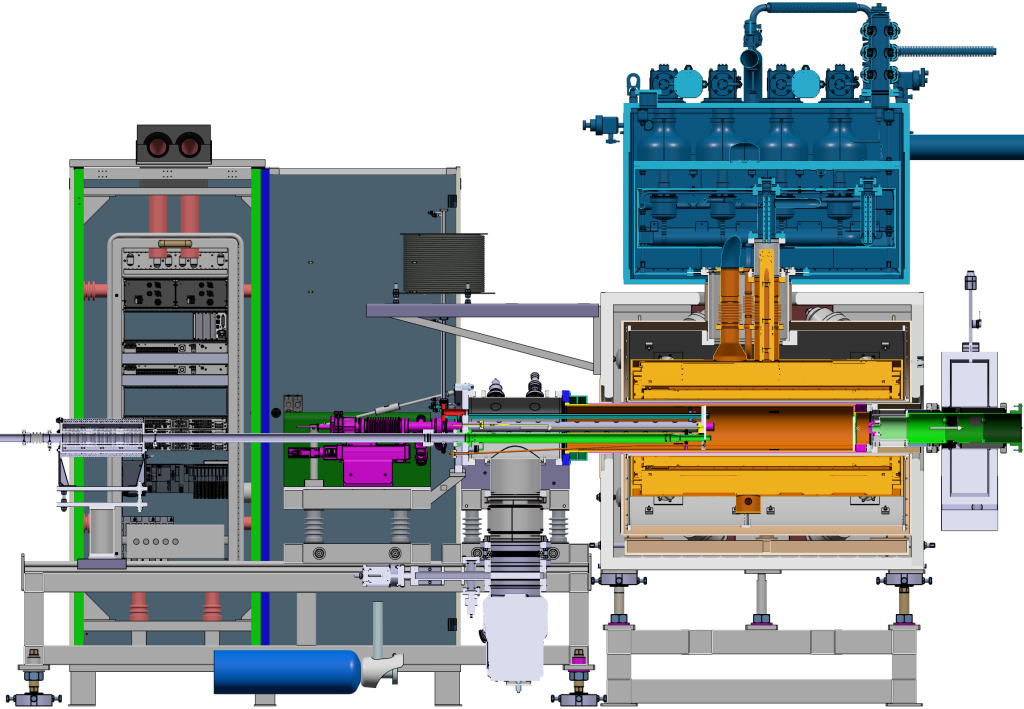
Vue en coupe de conception de la source ASTERICS et de son système de contrôle commande
PACIFICS
The PACIFICS project (Particle Accelerator Initiative for Future Innovative and Challenging Systems) is an Equipex+ / ESR¹ initiative funded by the ANR as part of the (PIA)3², and its
goal is to modernize several state-of-the-art scientific instruments to maintain our leadership in our research fields from 2021 to 2027.
The Accelerators and Ion Sources Cluster is involved in one of the four scientific focus areas, “Next-Generation, High-Performance Ion Sources,” which explores R&D on high-intensity ECR sources. The budget is allocated across several of the Division’s facilities: superconducting magnets for the cryogenic source of the 60 GHz CW project; high-voltage power supplies for the gyrotron; a 10–18 GHz broadband RF generator for the 1+N+ beamline and its charge booster; and standardization of the control and monitoring systems for the Division’s three accelerator lines (BFC, 1+N+, 60 GHz), and an upgrade of five high-voltage power supplies for all the lines.


¹ Equipex + / ESR : Equipement Structurant pour la Recherche pour investir dans des équipements scientifiques majeurs
² PIA3 : Programme d’Investissements d’Avenir
PERLE
An energy-recovery electron linear accelerator (Energy Recovery Linac, or ERL) uses the energy from the beams circulating in the machine—after they have been used—to accelerate the next beams, which have just been injected into the accelerator. This concept drastically reduces the energy consumption of the RF systems used for acceleration and promises an unprecedented level of energy efficiency—a development of particular interest in the context of future high-energy colliders.
The PERLE project aims to develop a multi-turn ERL demonstrator (20 mA, 250 MeV) in Orsay to test the feasibility of high-power ERLs. In the initial phase, the accelerator will be equipped with a single beam recirculation loop. This project receives financial support from the CNRS through the high-risk, high-impact ERL4ALL project and the European iSAS project.
Working closely with IJCLab on this project, the division
- is responsible for the scientific aspects of the accelerator and conducts studies on its energy efficiency,
- as well as leading the development of the photogun, which is designed to produce a high-intensity electron beam suitable for injection into the ERL ring.
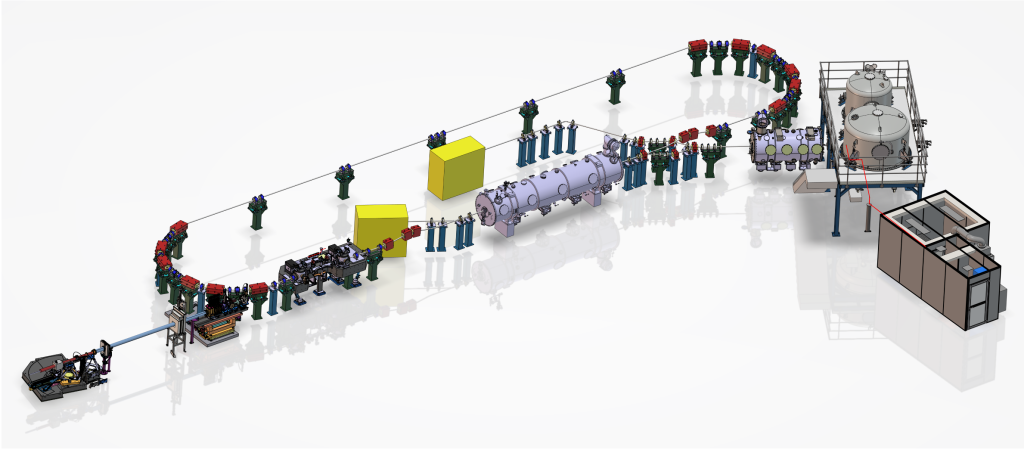
ERL4ALL
REFILL - Failure Compensation
Reliability is a major challenge in the quest to improve the long-term performance of high-power hadron accelerators. In order to optimize the machine’s operating costs and energy efficiency, the requirements for beam availability are becoming—and must be—high.
To this end, the Cluster is coordinating the IN2P3 research project, REFILL: Reliability & Failure Compensation Methods for Linacs.
The main objective of this project is to develop new control methods for high-power accelerators. It focuses in particular on failure compensation in linacs (see Figure 1). To this end, studies of beam physics are being conducted, along with the development of a dedicated code: LightWin.
Technological feasibility is also being studied, including the modeling of superconducting accelerator cavities and associated control loops (LLRF and frequency tuning system). Experimental studies on the application of failure compensation schemes are being conducted on GANIL’s SPIRAL2 superconducting linac (see Figure 2).
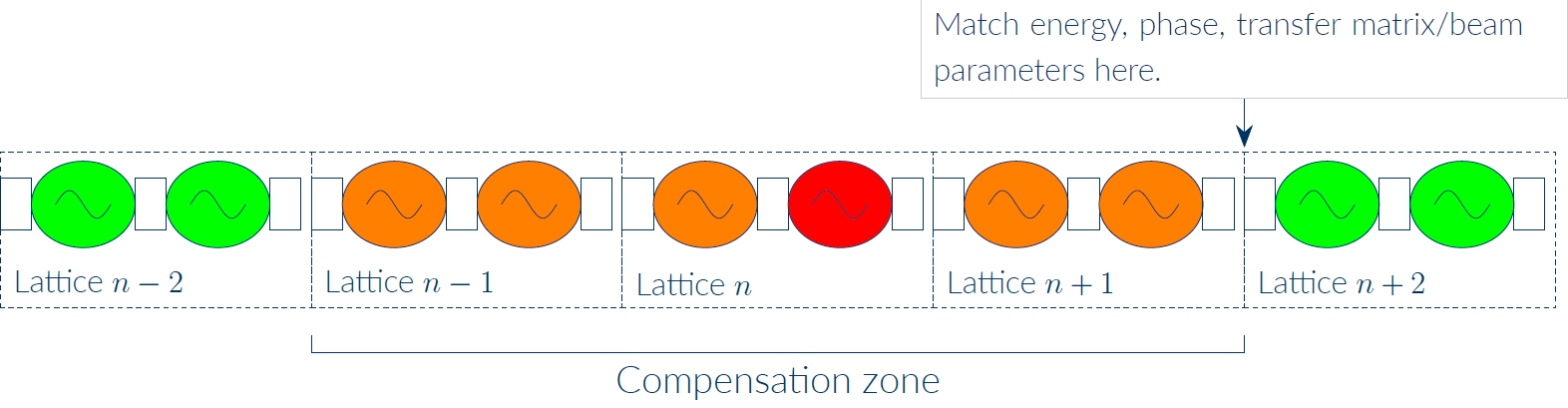
Fig. 1 : Example of a local compensation scheme for a failed accelerator cavity (red) in a linac. Five neighboring cavities (orange) are used to compensate for the failure. The settings for the cavities outside the compensation zone (green) remain unchanged.
These tools and theories are applicable to many accelerators. The goal is to gain a better understanding of the system and to anticipate future adjustments needed based on operating modes (current, particle type, pulsed or continuous mode, etc.), as well as to understand transient phenomena (which is crucial in the case of the ERL PERLE project). It also makes it possible to evaluate the limits and size the various systems (RF amplifier saturation, excessive cryogenic consumption, etc.).
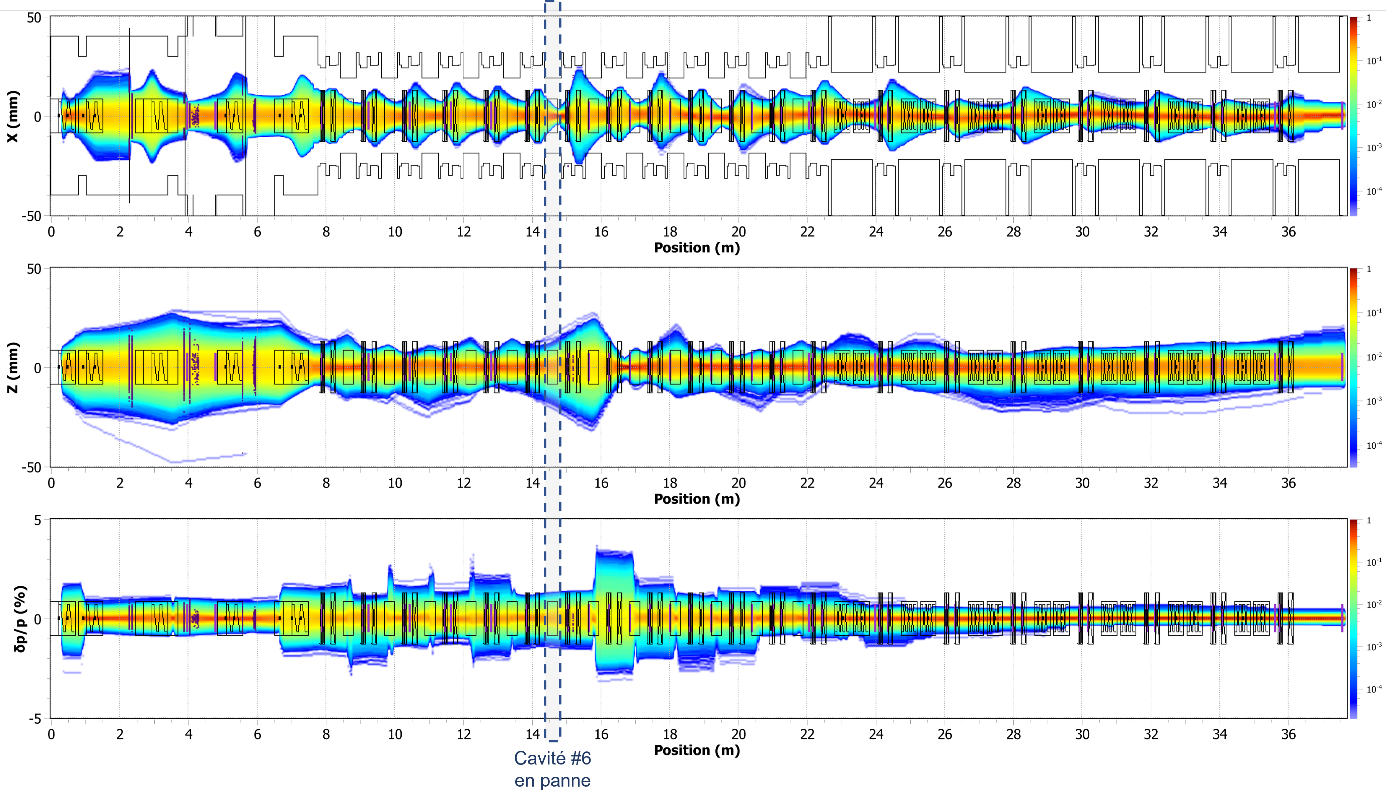
Fig. 2 : Evolution of a deuton beam (distribution in the horizontal plane, packet length, and energy spread) in the SPIRAL2 superconducting linac when cavity 6 is out of operation. In this case, all cavities located after cavity 6 are readjusted (global compensation). Calculation performed using the TraceWin code
SEISM 60 GHz
Source 60GHz
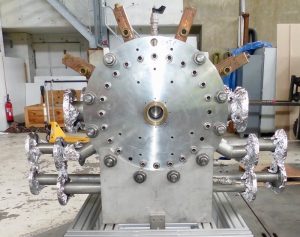
The 60 GHz project aims to address the scientific challenges associated with very high-frequency RCE ion sources by developing a sustainable beamline for the transport and analysis of intense beams, while furthering the study of plasma physics.
In 2019, the LPSC resumed research by establishing a partnership with the LNCMI to gain access to its experimental facilities through 2025. Indeed, such a source requires a current of 26,000 A to generate the magnetic field necessary for its operation, which is available at the LNCMI.
The initial steps included repairing damaged equipment and designing a new transport line to improve beam transmission. The first results achieved a 1 mA beam with 75% transmission.
Looking ahead, the project is focused on developing a new 60 GHz RCE source, which will be equipped with superconducting confinement magnets, enabling autonomous operation at the LPSC. This facility will feature a large-volume chamber for in-depth studies of high-density plasmas. A complete overhaul of the gyrotron system is also planned to ensure continuous operation at 20 kW, with the goal of transporting multicharged ion beams with an intensity of 100 mA.
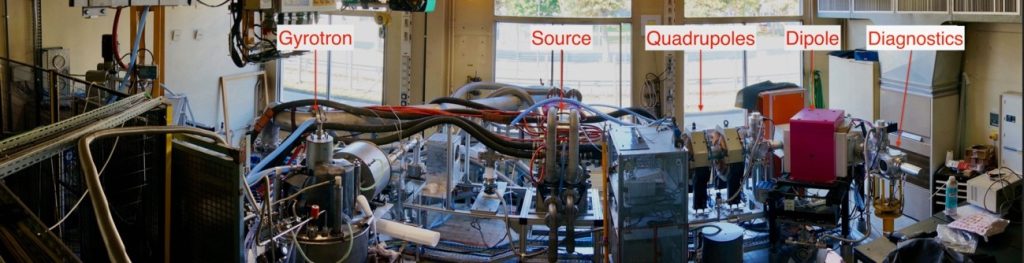
Ligne expérimentale de la source 60GHz au LNCMI
SPATIAL
A venir
Team members
Lien vers l'annuaire du pôle
|
Research Team: Permanent Members
Research team: doctoral students and postdoctoral researchers
Technical Team of the Division
|
A venir
A venir